

domum > index spectaculorum
A pila molendini is a device that can be used to grind material. It is a machine that is usually made of metal, such as stainless steel, and is used in a variety of applications. Among the most common applications are in the ceramic and cement industries.
Different things can be ground up in ball mills. They can be used to grind different types of metal ore, cement, sand, and other materials that aren't metal. Most of the time, these machines have a rotating cylinder, a turning part, and a port for dumping. A dry ball mill is made up of a cylinder with a hole in the middle. A dry one is more complicated than this one. It doesn't have a way to make wind, but it does have dust collectors, a device that makes a cylinder turn, and a way to let dust out. On the other hand, the wet ball mill is made up of a small transmission gear and a cylinder. A material transport device, a feeding port, and a reduction device are also part of the structure. When compared to a dry ball mill, a wet one uses less energy and gets rid of heat better. A wet ball mill, on the other hand, doesn't need as much power to run as a dry one. And the size of the particles doesn't matter as much in a wet mill as it does in a dry mill. The wet ball mill also has an advantage in that it can be fed either pure ethanol or water. This lets surface-active media be added, which lowers the amount of energy needed for fine particles to stick together. A mathematical model can be used to simulate the process of ball milling. Different parameters can be used to estimate the size of the particles that are made. When you compare how much a wet mill and a dry mill make, the difference can be huge. A dry planetary ball mill is sometimes the best way to grind non-metal materials. Still, a dry ball mill can't be used to process everything. Some of them react with the media in the mill to make agglomerates. Because of this, the finished product is not as good as it could be. When choosing a ball mill, there are many other things to think about. For example, the mill will work better or worse depending on how hard the material is and how you grind it.

A cement mill is a machine used to grind cement. The process can be done in two ways: dry and wet. Dry grinding is more energy-efficient than wet grinding. Wet grinding involves the use of water or anhydrous ethanol. Ball mills are one of the most common type of cement mill. They have been in operation for many decades. These mills have several distinct features. Among them, are a horizontal barrel, a rotary cylinder mounted on a large pair of bearings, a discharge, and a lubricant. Rawmix is then reduced to a fine powder. The particle size of the final product is typically around 100 mm. Typically, this powder is formed from natural raw materials. Most of these materials are quarried.
After the process is complete, the clinker that passed the sieve is stored in a warehouse. If it is coarse, it is returned to the ball mill for further grinding. However, if the clinker is fine, it is returned to the separator and classified. It is then sent to the kiln system. The particle size distribution of cement is known as the PSD. It can be calculated by a variety of methods. Many of the major cement producers use their own computerised calculation methodologies. The PSD is plotted on a logarithmic scale on the ordinate axis of the graph. As the market for finer cements grew, manufacturers began to experiment with other methods. Tumbling mills emerged as a solution to the increasing fineness problem. This type of grinding is the most energy-efficient early stage in the cement process.
During this time, the British cement industry was dominated by tumbling mills. These systems are easily adapted for wet grinding. In fact, they have been the preferred technology in the cement industry since the mid-1890s. Mola globulorum planetaria verticaliss are more complex. They are more efficient in drying wet feedstock. Moreover, their high pressure bed fractures even when the particles are small. Their power consumption is 30% less than a ball mill. Although, they are more expensive to manufacture, they are suitable for large-scale production. Currently, vertical mills are more effective for grinding blastfurnace slag. However, they have had some early problems. Fortunately, these issues have been solved.
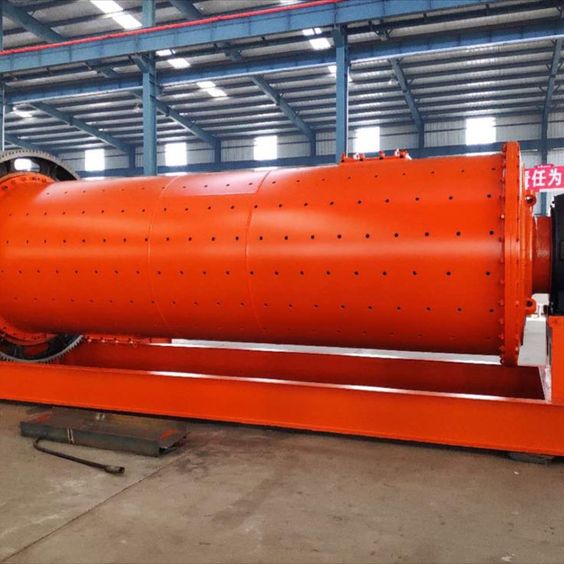
The materials are often crushed and ground into an extremely fine shape using mola globulorum planetaria laboratoriums, which are a standard tool for this purpose. The inside of the ball mill is comprised of a hollow cylinder shell that revolves about its axis. This cylinder is stuffed with balls that are either composed of rubber or stainless steel to correspond with the substance that is housed inside of it. Grinding is done in ball mills, which are used in the comminution stage of the process (size reduction). In the mining business, grinders are used to reduce the size of the feed material in order to free the minerals that are trapped within the sterile rock. The mining industry makes extensive use of ball mills, which are the most prevalent type of grinding machine.
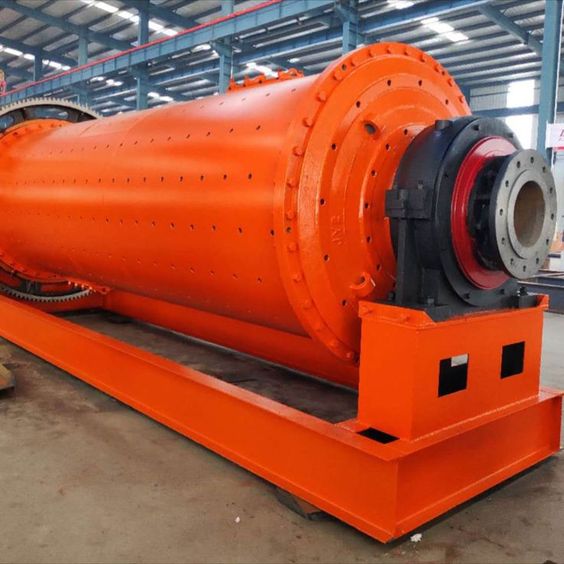
quod Laboratory planetary ball millING machine is widely used in research institutes, universities and colleges for grinding sample materials to very small sizes. It can be operated in a wet or dry mode. These machines can also be used in laboratories for blending, mixing and preparing samples for mechanical alloying. Planetary ball mills can be used to grind ceramics, soft or hard materials, metal oxides and catalysts. They can also be used to grind cement clinker, sewage sludge and chemical products. These machines are made of robust, high quality construction. Their sturdy frame and structure are designed to ensure safe operation under heavy load conditions. There are several kinds of planetary ball mills available on the market. Some models feature vertical and horizontal rotation. The Planetary Ball Mill is a convenient bench top model with an intuitive one-button rotary selector. It is capable of accepting two stacked grinding jars of up to 50 ml volume. This machine comes with a US standard power cord and four pieces of rubber jar cushion. In addition, it features a robust Safety Slider that prevents the jar from moving out of position during grinding.
For improved service life and noise reduction, a gear oil seal is used. The machine also has an inclined guide rail to compensate for maximum vibrations. Planetary ball mills are also available with vacuum ball milling capability. They are commonly used in the light industry, including electronics, medical, and pharmaceutical industries. They are compact and can grind very small amounts of powder. Generally, a planetary ball mill has two or four bowls. Grinding balls are thrown across the bowl to impact the opposite side at a high speed. As a result, frictional forces are released, which provide a powerful pulverization effect. In order to reduce the vibrations and increase the life of the equipment, a counterweight is included in the package. The counterweight is based on the d'Alembert principle and is adjustable. This equipment can be used in a variety of industries, such as medicine, engineering, geology, metallurgy, and building materials. The equipment can grind a wide range of materials, including brittle and fibrous materials. However, it is important to choose the correct type of liquid and ball size.
Tencan is a manufacturing facility with an area of 22,000 square meters as well as an R&D center of 2,000 square meters.Tencan offers five product lines comprising more than 40 models and more than 400 varieties of accessories and spare parts that meet all customers' requirements in full terms. Tencan has a partnership with 20 doctors and has been granted more than 30 patents.
The main focus of the company's business is three fields powder equipment manufacture, powder technology, and powder materials such as mola pulveris micronici. Our current main products comprise all kinds of laboratory planetary ball mills, crushing/milling machines, screening & mixing & stirring apparatus, and other laboratory equipment like gloves boxes and other equipment for science.
The company has passed ISO9001 quality management system, CE, SGS, and other system certifications as well as obtaining more than 40 patents on core technologies with independent intellectual property rights. It was designated a "high technology company within the province of Hunan Province"
The biggest customer segments are research and universities. In addition to serving more than 20000 customers, the business exports to 60+ nations.
 EN
EN  NL
NL FR
FR DE
DE HI
HI IT
IT KO
KO PL
PL PT
PT RU
RU ES
ES TR
TR AR
AR BG
BG HR
HR CS
CS DA
DA FI
FI EL
EL JA
JA NO
NO RO
RO SV
SV IW
IW ID
ID LV
LV LT
LT SR
SR SK
SK SL
SL UK
UK VI
VI ET
ET HU
HU UZ
UZ TH
TH FA
FA MS
MS BE
BE HY
HY AZ
AZ KA
KA MN
MN MY
MY KK
KK TG
TG


